The main door is more than an entrance to your home. It contributes to the exterior appearance, provides privacy, and plays an important role in everyday security. For small houses and modern apartments, choosing a suitable door means balancing appearance, available space, durability, and budget.
Today, Indian main door designs range from simple wooden panels and minimalist flush doors to contemporary steel doors and designs featuring decorative glass. Each option offers different benefits, depending on the building’s architecture, the entrance layout, and the local weather conditions.
A beautiful main door does not have to feature elaborate carvings or expensive materials. A clean design, a well-fitted frame, coordinated hardware, and an appropriate finish can create an attractive entrance without unnecessary decoration.
Popular Simple Indian Main Door Designs for Small Homes
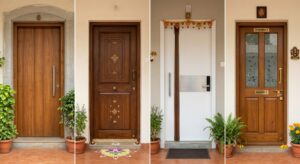
Small homes often benefit from entrance designs that make the best use of available space. A door with balanced proportions, simple detailing, and a coordinated finish can complement the exterior without making the entrance appear overcrowded.
When comparing Indian main door designs, consider the size of the doorway, the surrounding walls, the available light, and the space needed to open the door comfortably.
Minimalist Wooden Main Door Designs
Minimalist wooden doors are suitable for homeowners who prefer natural textures and understated decoration. Their appearance depends largely on the wood grain, colour, surface finish, and arrangement of decorative details.
A plain wooden door in a natural brown shade can complement both traditional Indian houses and contemporary homes. Vertical grooves, narrow wooden strips, or a small geometric panel can add interest without making the design look complicated.
For a compact entrance, a simple pattern can be easier to coordinate with the surrounding walls and flooring than an elaborate carved design. Pair the door with suitable hardware and a frame that complements its finish.
Single Main Door Designs for Compact Entrances
A single-leaf main door is a practical option for many small houses because Indian main door designs avoids the additional opening width required by a pair of door leaves.
Popular styles include plain wooden doors, simple panelled designs, wood-look finishes, and minimalist doors with narrow decorative grooves. These options can provide an elegant appearance without requiring extensive decoration.
The most important consideration is whether the door fits the entrance and provides adequate clearance when opened. Check its swing direction and make sure it does not interfere with furniture, walls, stairs, or the main passage.
Modern Flush Door Designs
Flush doors feature relatively flat surfaces that suit contemporary homes with clean architectural lines. Their understated appearance makes them suitable for homeowners who prefer simplicity over elaborate patterns.
A flush-style design can feature a wood-look finish, a solid colour, or subtle grooves. A coordinated frame and minimalist handle can complete the appearance without adding unnecessary decoration.
Simple Main Door Designs with Decorative Panels
Decorative panels provide a way to add character to a simple door while maintaining a balanced appearance. Rectangular panels, narrow vertical sections, and understated geometric patterns can suit a variety of Indian home styles.
Modern Indian Wooden Main Door Designs
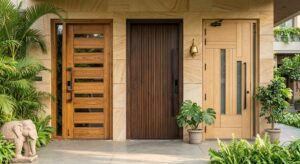
Wooden doors remain a popular choice because they offer natural texture and a wide range of finishes. They can complement traditional houses, contemporary apartments, and modern independent homes.
Natural Wood Finishes for a Warm Look
Natural wood finishes highlight the grain and texture of the material. Depending on the wood species and coating, the finished door may have golden, honey, reddish, or deep brown tones.
These finishes can complement cream walls, neutral flooring, stone-textured surfaces, and simple entrance lighting. They also work well when homeowners want a natural feature against a modern exterior.
If you prefer a subtle appearance, choose a finish that coordinates with the surrounding architecture rather than competing with Indian main door designs.
Remember that natural wood grain varies, so the finished door may not look exactly like a catalogue photograph. Ask to inspect a physical sample before making a final decision.
Light and Dark Wooden Door Designs
Light and dark wood finishes create different visual effects, making both useful choices for modern homes. Light wood tones can create a fresh, understated appearance and often coordinate well with white walls, pale flooring, and simple architectural details.
Dark brown finishes provide stronger contrast and can create a more formal appearance against lighter exterior walls. Medium brown tones offer a balanced alternative for homeowners who want a natural look without an especially light or dark finish.
Vertical and Horizontal Wooden Patterns
Vertical wooden patterns use lines that extend from the top of the door towards the bottom. They can create a taller visual emphasis and work well with contemporary architecture that uses vertical elements.
Horizontal patterns create a wider visual emphasis and may complement façades with long windows, horizontal bands, or clean rectangular shapes.
These patterns can be achieved through grooves, wooden strips, veneers, or decorative panels. The best option depends on the door’s construction and the appearance you want to achieve.
Space-Saving Main Door Designs for Small Houses
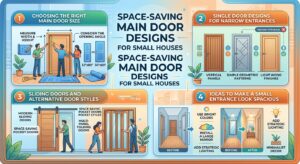
A space-saving entrance should provide convenient access while using the available area effectively. This is particularly important in compact houses, narrow corridors, and small urban properties.
The best design depends on the entrance layout, the direction of movement, the surrounding walls, and the type of opening mechanism.
Choosing the Right Main Door Size
Accurate measurements are essential when selecting a main door. For an existing house, measure the opening carefully and check the condition of the frame before ordering a replacement.
For new construction, confirm the doorway dimensions with the architect, engineer, or contractor before the surrounding structure is completed.
Consider the clear passage available when the door is open, rather than focusing only on the dimensions of the door panel. The frame, hinges, handle, and opening angle can all affect how easily people move through the entrance.
Accessibility is also important. The doorway should provide suitable clearance for the people who will use Indian main door designs, taking account of mobility needs and applicable building requirements.
Single Door Designs for Narrow Entrances
A simple single-leaf door can work well when an entrance has limited space. A smooth surface, restrained pattern, and appropriately sized hardware can help create a neat appearance.
Avoid decorative features that project unnecessarily into a narrow passage. A simple frame and coordinated finish can provide an attractive entrance without requiring elaborate borders.
The opening direction deserves equal attention. Check that the door will not obstruct a staircase, interfere with nearby furniture, or block a necessary route when fully opened.
Sliding Doors and Alternative Door Styles
Sliding doors move along a track instead of swinging through the doorway. This can be useful in layouts where the swinging movement of a conventional door would occupy valuable floor space.
However, a sliding door needs room for the panel to travel. The track, locking system, frame, and installation must also be appropriate for its intended use.
For a primary entrance, do not select a sliding system solely because Indian main door designs saves space. Check its security, weather resistance, privacy, and locking performance. Some sliding doors are designed mainly for patios or internal partitions rather than as a home’s main entrance.
Folding and pivot doors are other alternatives, but they have different clearance, hardware, and installation requirements. Their suitability depends on the building layout and the particular product.
Ideas to Make a Small Entrance Look Spacious
A small entrance can feel more welcoming when the door, walls, lighting, and surrounding area work together.
Consider these practical ideas:
- Choose a door colour that complements the surrounding walls.
- Use a simple panel arrangement instead of excessive decoration.
- Keep shoes and storage units from obstructing the passage.
- Install suitable lighting to improve visibility around the entrance.
- Coordinate the frame and hardware with the overall exterior.
- Limit nearby decorations so the doorway does not look overcrowded.
A lighter colour scheme may help create a brighter visual effect when the entrance has limited natural light.
Best Colors and Materials for Simple Indian Main Doors
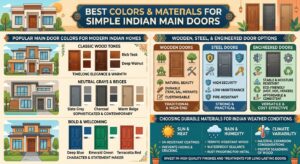
The colour and material of a main door influence its appearance, maintenance, and suitability for the local environment. A good choice should complement the house while meeting practical requirements.
Before selecting a door, consider whether Indian main door designs will be exposed to rain, humidity, strong sunlight, dust, or coastal conditions.
Popular Main Door Colors for Modern Homes
Brown and natural wood tones are versatile choices for Indian main doors. They can complement cream walls, beige surfaces, stone finishes, and a range of architectural styles.
Black and charcoal create stronger contrast and may suit contemporary houses with lighter exteriors. Grey provides a more understated option for homeowners who prefer neutral colours.
White and off-white can create a clean appearance, although dirt and marks may be more noticeable depending on the finish. Muted green, deep blue, and other accent colours can also work when they coordinate with the home’s exterior.
Wooden, Steel, and Engineered Door Options
Different materials offer different combinations of appearance, durability, maintenance, and cost.
Solid wood doors: These offer natural grain patterns and can be finished in a variety of shades. Their performance depends on the wood species, construction, protective coating, installation, and exposure to moisture.
Engineered wood doors: These are made from manufactured wood-based materials and can provide consistent dimensions and different surface finishes. Their suitability for exterior use depends on the specific product’s construction and moisture resistance.
Steel doors: Properly constructed steel doors can provide a durable entrance option. Protective coatings are important because damaged or exposed metal may corrode, particularly in humid or coastal environments.
Composite and other manufactured doors: These products combine materials to achieve particular design or performance characteristics. Their suitability depends on the manufacturer’s specifications and intended application.
Choosing Durable Materials for Indian Weather Conditions
India has a wide range of climatic conditions. A door exposed to heavy monsoon rain may face different challenges from one installed in a dry region or a coastal area.
Wood can absorb moisture and may swell or warp under unsuitable conditions. Sunlight can affect some finishes, while steel can corrode if Indian main door designs protective coating is damaged. Engineered products also vary in their resistance to moisture and environmental exposure.
To improve durability, consider these precautions:
- Choose a door specifically designed for its intended location.
- Use a protective coating appropriate for the selected material.
- Provide a suitable canopy or covered entrance where practical.
- Ensure that the frame and surrounding joints are installed and sealed correctly.
- Follow the manufacturer’s instructions for cleaning and maintenance.
- Inspect the finish, hinges, locks, and seals periodically.
The complete installation matters as much as the door panel. Even a suitable door can develop problems if water enters through poorly sealed joints or the frame is installed incorrectly.
Simple Indian Main Door Designs with Modern Features
Modern main doors combine visual simplicity with practical details. Handles, frames, locks, glazing, and finishes influence both appearance and everyday performance.
The most effective features complement the design without making the entrance unnecessarily complicated.
Main Doors with Minimalist Handles and Hardware
Minimalist hardware can give a main door a clean, contemporary appearance. Straight lever handles, simple pull handles, and understated locksets are common choices.
Choose hardware that is compatible with the door’s thickness, weight, and construction. Exterior fittings should also be suitable for the local environment.
Security depends on more than the handle. The quality of the lock, strike plate, hinges, frame, fixing points, and installation all contribute to the entrance’s performance.
Simple Doors with Glass Inserts
Glass inserts can introduce natural light and add visual interest to a main door. A narrow vertical insert or a small upper panel may suit some entrance layouts better than a large glass section.
Privacy should be considered carefully, especially when the entrance faces a street or shared corridor. Frosted and textured glass can obscure direct views, but the actual level of privacy depends on the glazing and lighting conditions.
For a main entrance, choose glazing suitable for the intended application. Ask the supplier about safety-glass requirements, secure installation, and the effect of the glass on the door’s overall security.
Modern Door Frames and Border Designs
The door frame supports the door and helps Indian main door designs open, close, and latch correctly. Its finish also contributes to the entrance’s overall appearance. For a minimalist home, a frame that matches the door can create a continuous look. A contrasting border can add definition when it complements the surrounding walls.
Pay attention to frame material, alignment, fixing, and sealing. Poor installation can lead to gaps, difficulty closing the door, water entry, or problems with the locking system. Choose a frame that is compatible with the door and suitable for the installation conditions.
Traditional Indian Details with a Contemporary Touch
Traditional Indian architecture offers many ideas for creating a distinctive entrance. Geometric motifs, wooden panels, understated metal accents, and warm finishes can introduce traditional character without requiring elaborate decoration.
How to Choose the Best Main Door Design for Your Home

Selecting a main door involves more than choosing an attractive style. The right design should suit the building, fit the opening, provide appropriate security, and remain practical to maintain.
Matching the Door with Your Home’s Architecture
Begin by considering the overall architectural style of your house. A contemporary home with clean lines may suit a flush door or a design with subtle vertical grooves.
A traditional house may look more balanced with natural wood tones, panel details, or restrained decorative features.
Consider the exterior wall colour, windows, flooring, porch, and entrance lighting. A door that coordinates with these features can create a more unified appearance.
Balancing Style, Security, and Privacy
A main door should provide suitable protection while remaining convenient for everyday use. Check the quality of the door leaf, frame, hinges, lock, strike plate, and installation. The door should close properly, and the locking hardware should be suitable for its intended purpose.
If the design includes glass, confirm that the glazing and installation are appropriate for a primary entrance. Privacy also matters. A solid door or suitable privacy glazing may be preferable when the entrance opens directly onto a public road or shared corridor.
Evaluate the complete entrance system rather than assuming that an attractive appearance or a particular material automatically guarantees security.
Comparing Durability and Maintenance Requirements
Different door materials require different types of care. Wooden doors may need periodic attention to their protective finish, especially when exposed to moisture or sunlight.
Steel doors require inspection of their coatings and hardware to identify damage or corrosion. Engineered and composite products should be maintained according to their specific manufacturer instructions.
Before buying, ask about cleaning methods, refinishing requirements, exterior suitability, warranty coverage, and the availability of replacement hardware.
Choosing a Design That Fits Your Budget
Your budget should cover the complete installation rather than the door panel alone. Depending on the project, additional expenses may include the frame, hinges, locks, handles, transport, finishing, installation, and changes to the existing opening.
A simple design may reduce decorative fabrication costs, but the final price still depends on the material, dimensions, construction, hardware, and workmanship.
Request itemised quotations from multiple suppliers and compare products with similar specifications. This helps you evaluate the overall value instead of choosing solely on the lowest initial price.
Budget-Friendly Simple Indian Main Door Designs
An attractive entrance does not always require a completely new door. If the existing door is structurally sound and secure, a few carefully selected improvements may refresh its appearance.
The important thing is to distinguish cosmetic upgrades from repairs that affect safety, durability, or security.
Affordable Door Designs That Look Elegant
Plain wooden doors, understated panel designs, and simple flush-style finishes can create an elegant appearance without elaborate decoration. Manufactured doors with wood-look finishes may also be worth considering, provided their specifications meet the requirements of an exterior entrance.
Choose a design with a clear visual theme. A coordinated finish, neatly fitted frame, and well-proportioned handle can create a refined appearance without numerous decorative elements. Compare construction quality, warranty, installation requirements, and maintenance costs before deciding which option offers the best value.
Ways to Upgrade an Existing Main Door
If the existing door remains in good condition, updating Indian main door designs appearance may be more practical than replacing it.
Consider these improvements:
- Repaint or refinish the door using a compatible product.
- Replace worn handles with suitable, properly fitted hardware.
- Repair damaged coatings and investigate the cause of moisture problems.
- Clean the door and frame to improve their appearance.
- Improve the entrance lighting where necessary.
- Replace worn seals or adjust hinges if the door no longer closes properly.
Before making cosmetic changes, inspect the door for warping, rot, corrosion, loose hinges, or locking problems. Significant defects may require professional repair or replacement.
Tips for Reducing Installation and Maintenance Costs
Accurate measurements help prevent ordering mistakes and unnecessary installation work.
If the existing frame is secure, properly aligned, and compatible with the replacement door, retaining Indian main door designs may reduce costs. However, a damaged or poorly fitted frame should be repaired or replaced when necessary.
Other practical steps include comparing itemised quotations, choosing compatible standard hardware where appropriate, and following the manufacturer’s maintenance instructions.
Avoid compromising on essential security features, correct installation, or weather protection simply to reduce the initial price. A sensible balance between appearance, construction quality, and maintenance can help keep the overall cost manageable.
Read more: Modern Window Design: Stylish Ideas, Types, and Trends for Every Home
Common Mistakes to Avoid When Choosing a Main Door
Even an attractive door can become inconvenient if Indian main door designs does not fit the entrance or withstand everyday conditions. Understanding common mistakes can help homeowners make more informed decisions.
Ignoring Door Measurements and Entrance Space
Never order a door based solely on an estimated measurement or a photograph of another house.
Measure the opening carefully and consider the frame, threshold, handle clearance, swing direction, and available passage. For new construction, confirm the dimensions with the relevant building professional before finalising the opening.
Incorrect measurements can lead to fitting problems, restricted access, and additional installation costs.
Choosing Appearance Over Security
A decorative door is not automatically a secure door. Security depends on the complete assembly, including the door leaf, frame, hinges, locks, strike plate, and installation.
Check that the selected components are compatible and appropriate for a primary entrance. If the door includes glass, consider its location, applicable safety requirements, and effect on the overall security of the entrance.
Overlooking Weather Resistance and Maintenance
A main door exposed to rain, humidity, dust, and sunlight needs appropriate materials and protective finishes.
Ignoring small problems can allow them to become more serious. Peeling paint, corrosion, swollen wood, loose hinges, and damaged seals should be inspected and addressed as appropriate.
Choose a product designed for the installation conditions, follow the manufacturer’s maintenance recommendations, and inspect the entrance periodically. Regular maintenance can help preserve the door’s appearance and operation, although its effectiveness depends on the material, construction, and environmental exposure.
Final Thoughts
Choosing the right main door means balancing appearance, security, durability, space, and budget. Simple Indian main door designs offer plenty of options for homeowners who want a welcoming entrance without unnecessary decoration.
Minimalist wooden doors, flush-style designs, decorative panels, and suitable steel or engineered doors can all complement small and modern homes. The right choice depends on the architectural style, entrance dimensions, local weather conditions, construction quality, and maintenance requirements.
Before making a purchase, measure the opening carefully, compare materials, confirm that the door is suitable for exterior use, and pay attention to the frame, hinges, locks, and installation. These practical considerations are just as important as choosing an attractive colour or pattern.
FAQs About Simple Indian Main Door Designs
1. Which Main Door Design Is Best for a Small Indian Home?
A simple single-door design with clean lines and minimal decoration works well in small Indian homes. Minimalist wooden, flush, and panel doors can create a stylish look without making the entrance feel crowded.
2. Which Color Is Best for a Simple Indian Main Door?
Brown, natural wood, black, and charcoal are versatile colors for modern Indian main doors. Choose a shade that complements your exterior walls, windows, and overall home design.
3. Are Wooden Main Doors Suitable for Modern Homes?
Yes, wooden main doors suit modern homes with their natural textures, elegant finishes, and timeless appeal. Choose durable materials, protective coatings, and proper installation for better performance and longevity.
4. Which Main Door Material Is Easiest to Maintain?
Steel doors can require relatively little maintenance, while wooden doors may need periodic refinishing. Compare durability, weather resistance, maintenance requirements, and manufacturer specifications before choosing a material.
5. How Can I Make a Small Main Entrance Look More Attractive?
Choose a stylish door pattern, coordinated colors, and modern hardware to enhance your entrance. Add suitable lighting, keep the surrounding area organised, and select a frame that complements your home’s exterior.