Windows can influence the appearance, daylight, ventilation, privacy, and comfort of a home. They can also affect heating and cooling demand because glass and frames are part of the building envelope. For that reason, choosing a modern window design should involve more than selecting an attractive frame or a large pane of glass.
Modern windows are available in many styles, including casement, sliding, awning, picture, bay, bow, and large-format configurations. Their performance can vary according to the frame material, glazing, installation, orientation, and climate.
Whether you are building a new home or replacing existing windows, understanding the available designs and their practical characteristics can make the decision easier.
What Is Modern Window Design?
Modern window design generally describes contemporary approaches to window appearance, configuration, materials, and performance. Common characteristics include simple lines, larger areas of glass, streamlined frames, and designs that emphasize daylight and outdoor views.
There is no single window style that qualifies as a modern window. A casement window, for example, can look contemporary when combined with a simple frame and large glass area, while a picture window can create a minimalist appearance without any moving parts.
A good modern window design should balance appearance with practical requirements such as ventilation, privacy, energy performance, maintenance, and the architectural style of the home.
Key Features of Modern Window Design
Modern windows often emphasize clean and uncomplicated visual forms. Large glass areas, narrow-looking frames, and simple geometric arrangements are common choices for contemporary homes.
Performance is also an important part of modern window technology. Double- and triple-pane insulated glazing, low-emissivity coatings, gas-filled spaces between panes, and improved frame construction can reduce heat transfer.
However, a window’s performance cannot be judged by appearance alone. The complete window assembly, including its frame, glazing, seals, and installation, should be considered.
How Modern Window Design Differs From Traditional Styles
Modern and traditional window styles can differ in their proportions, frame details, decorative elements, and relationship to the surrounding architecture.
Traditional designs may include features such as divided glass patterns, decorative trim, or proportions associated with historical architectural styles. Modern designs often favor simpler forms and larger uninterrupted areas of glazing.
The distinction is not absolute. The same basic window type can be used in both traditional and contemporary homes. The surrounding architecture, frame finish, glass arrangement, and proportions help determine the overall appearance.
What Are the Most Popular Types of Modern Windows?
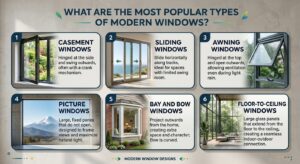
Different window types provide different combinations of ventilation, views, operation, and appearance. Choosing among them depends on the room, available space, climate, and homeowner preferences.
Casement Windows
Casement windows are hinged on one side and open outward. They can provide substantial ventilation when open and are commonly used in residential applications.
Because the sash closes against the frame, a properly installed casement window can provide good resistance to air leakage. Its vertical proportions and relatively simple appearance also make Modern window design suitable for many contemporary designs.
Sliding Windows
Sliding windows, also called gliding windows, operate by moving one sash horizontally past another. Because they do not swing outward, they can be useful where exterior clearance is limited.
Their horizontal shape can suit wide walls and contemporary façades. They are also relatively straightforward to operate.
However, sliding windows can have different air-leakage characteristics from hinged windows, so product specifications should be checked when energy performance is important.
Awning Windows
Awning windows are hinged at the top and open outward from the bottom. Their configuration can provide ventilation while helping keep the opening positioned above normal eye level.
This makes them useful in certain locations where ventilation and privacy are both considerations. They can also be combined with fixed glazing to create larger window arrangements.
Picture Windows
Picture windows are fixed windows that do not open. Their primary purposes are providing views and allowing daylight into a room.
Because they have no operating sash, fixed windows can be designed with relatively low air leakage when properly manufactured and installed. However, they do not provide ventilation and therefore may need to be combined with operable windows when natural ventilation is required.
Bay and Bow Windows
Bay windows project outward from the wall and typically use several window units arranged at angles. Bow windows are similar but usually form a more curved projection using multiple window sections.
These configurations can add visual depth to an exterior and create additional usable or decorative space inside a room.
They can be used in contemporary homes as well as traditional properties. The final appearance depends heavily on the number of sections, frame design, glass arrangement, and surrounding architecture.
Floor-to-Ceiling Windows
Floor-to-ceiling windows use a large vertical area of glazing and can provide extensive views and daylight. They can create an open, visually connected feeling, particularly when positioned toward gardens, balconies, patios, or other attractive outdoor areas.
However, large areas of glass can also affect solar heat gain and glare. Window orientation, glazing properties, shading, and climate should therefore be considered before selecting this type of design.
What Are the Best Modern Window Design Ideas?
The best modern window design depends on the architecture of the home and the practical needs of the room. The following ideas can help create a contemporary appearance while keeping functionality in mind.
Minimalist Black-Frame Windows
Black and other dark-colored frames can create strong visual contrast and emphasize the geometric lines of a contemporary building. This approach can work especially well with light-colored walls, natural materials, and simple interior finishes.
Frame color, however, is primarily an aesthetic choice. A black frame is not automatically more energy efficient than another frame color. The actual frame construction and glazing specifications should be evaluated separately.
Large Glass Window Designs
Large glass windows can increase the visual connection between indoor and outdoor spaces and allow more daylight into a room. Picture windows and combinations of fixed and operable windows can be used to create this effect.
Large glazing should be selected carefully because glass can also allow solar heat into a building. Performance characteristics such as U-factor and solar heat gain coefficient can help homeowners compare products.
Floor-to-Ceiling Window Designs
Floor-to-ceiling glazing can make a room feel visually open and can provide expansive views. This design can be especially effective when the window faces a garden, landscape, or other desirable view. Modern window design can also work with minimalist interiors where the glass becomes an important visual feature.
Because the amount of glass is substantial, consider solar exposure, privacy, shading, and thermal performance before installation.
Natural Wood Window Designs
Wood frames can bring warmth and natural texture to a modern home. Wood also has useful insulating characteristics. The main consideration is maintenance. Exterior wood can be exposed to moisture and weather, so Modern window design generally requires appropriate protection and periodic maintenance.
Wood can be a good choice when homeowners want a contemporary design without losing the visual warmth of a natural material.
Minimal-Frame Window Styles
Minimal-looking frames place greater visual emphasis on the glass and can support a clean contemporary appearance.
However, a narrow-looking frame does not automatically indicate better thermal performance. Frame construction, glazing, seals, and installation all affect how a window performs.
What Are the Latest Modern Window Design Trends?
Modern window trends combine changing aesthetic preferences with developments in window technology. Some trends focus mainly on appearance, while others are designed to improve energy performance or control light and heat.
Slim and Minimal Window Frames
Slim visual profiles are popular in contemporary architecture because they can make the glass appear more prominent. They can create a clean appearance when used with large panes and simple architectural lines.
The important consideration is to check the actual performance of the frame. Materials such as aluminum can conduct heat readily, so thermally improved construction may be important when thermal performance is a priority.
Larger Glass Panels
Larger glass panels can provide wider views and more daylight. They are often used in living rooms, dining areas, bedrooms, and other spaces where outdoor views are important.
However, increasing the glass area can also increase exposure to solar radiation. The best design therefore considers both the desired daylight and the home’s solar exposure.
Energy-Efficient Window Designs
Energy efficiency is an important part of modern window technology. High-performance windows may use multiple panes, low-emissivity coatings, insulating gas fills, improved spacers, and insulated frame materials. The goal is to reduce unwanted heat transfer and improve indoor comfort.
There is no single specification that is ideal for every location. U-factor measures heat transfer through the window, while solar heat gain coefficient indicates how much solar heat enters through the glazing. The appropriate values depend partly on the local climate and building conditions.
Smart and Automated Windows
Smart window technology can provide additional control over light and solar heat. Some advanced dynamic windows can change their optical properties in response to electrical control.
These technologies can be useful in certain high-performance buildings, but availability, installation requirements, complexity, and cost should be considered before choosing them for a home.
Indoor-Outdoor Window Designs
Contemporary homes often use windows to strengthen the visual relationship between interior rooms and outdoor spaces. Large picture windows, wide glazing combinations, and window-and-door arrangements can create this effect.
The goal should not simply be to install as much glass as possible. A successful indoor-outdoor design also considers privacy, solar control, ventilation, energy performance, and the quality of the exterior view.
How to Choose Modern Window Designs for Different Rooms
Different rooms have different requirements, so one modern window design may not work equally well throughout an entire home.
Modern Living Room Window Ideas
Living rooms often benefit from windows that provide daylight and attractive outdoor views. Large picture windows, casement combinations, bay windows, or combinations of fixed and operable windows can all be considered.
If the room receives strong direct sunlight, glazing performance and shading should be considered to help manage heat and glare.
Modern Bedroom Window Ideas
Bedroom windows should balance daylight, ventilation, privacy, and comfort. Casement, awning, and sliding windows can provide different approaches to ventilation. Window coverings can also help control privacy and incoming light.
The placement of the window is important as well. A higher window can provide daylight while reducing direct visibility from outside.
Modern Kitchen Window Ideas
Kitchen windows should be selected with operation, ventilation, cleaning, and available wall space in mind.
Casement windows can be convenient in locations where reaching a conventional sliding sash may be difficult. A window positioned above a sink, for example, can be designed with an operating mechanism that is accessible from the kitchen work area.
Modern Bathroom Window Ideas
Bathroom windows require special attention to privacy and moisture. Higher-positioned windows, appropriately selected glazing, and window coverings can help balance daylight and privacy.
Operable awning windows can also provide ventilation while keeping the opening relatively high on the wall.
Modern Home Office Window Ideas
A home office can benefit from natural light and outdoor views, but excessive glare can make computer screens difficult to see. Window orientation, glazing properties, shading, and desk placement should therefore be considered together.
Visible transmittance describes how much visible light passes through glazing, while solar heat gain coefficient relates to solar heat entering the room. Both characteristics can be relevant when selecting windows for a workspace.
Which Materials Are Best for Modern Windows?
There is no universally best frame material. Aluminum, uPVC or vinyl, wood, and fiberglass each have different characteristics. The right choice depends on climate, appearance, maintenance expectations, durability, thermal performance, and budget.
Aluminum Window Frames
Aluminum frames are strong, lightweight, and commonly used in contemporary window designs. A major consideration is thermal conductivity. Aluminum conducts heat more readily than insulating frame materials, so thermally improved aluminum frames can help reduce heat transfer.
uPVC Window Frames
uPVC, often called vinyl in some markets, is widely used for residential windows. Modern window design has relatively good insulating characteristics and generally requires less maintenance than exterior wood.
uPVC can be combined with insulated glazing to create energy-efficient window assemblies. The performance of the complete window should still be checked rather than judging the product only by its frame material.
Wood Window Frames
Wood provides a natural appearance and has good insulating characteristics. Modern window design main disadvantage is maintenance. Exterior wood needs appropriate protection against moisture and weather to reduce the risk of deterioration.
For homeowners who value natural materials and are prepared for the required maintenance, wood can complement both modern and traditional homes.
Fiberglass Window Frames
Fiberglass frames are known for strength, durability, and relatively low maintenance. Fiberglass can also be designed with insulated frame sections, helping improve thermal performance. Modern window design is an option worth considering when homeowners want a durable frame combined with a contemporary appearance and good insulating potential.
Read more: Globeinsightblog com Explained: Features, Content, and Benefits
What Are the Benefits of Modern Window Design?
A carefully planned modern window design can provide more than visual appeal. It can help address daylight, ventilation, views, privacy, comfort, and energy performance.
More Natural Light
Windows are an important source of natural daylight. Glazing with higher visible transmittance allows more visible light to pass through, although the amount of daylight that reaches a room also depends on window size, orientation, surrounding buildings, shading, and interior conditions.
Better Energy Efficiency
Modern high-performance windows can reduce heat transfer through improvements such as insulated glazing, low-emissivity coatings, gas fills, and better frame construction.
The amount of energy saved depends on the existing windows, climate, building design, window orientation, product specifications, and installation quality.
Energy-efficient windows should therefore be selected according to the conditions of the home rather than assuming that the most expensive option will always provide the best result.
Improved Ventilation
Operable windows can provide natural ventilation when outdoor conditions are suitable. Casement, awning, and sliding windows use different operating mechanisms, but all can be part of a ventilation strategy.
The actual amount of ventilation depends on the size and location of the opening, wind conditions, indoor-outdoor temperature differences, and the overall design of the building.
Enhanced Privacy and Comfort
Window design can influence both visual privacy and thermal comfort. Higher-positioned windows, appropriate glazing, window coverings, and thoughtful placement can help limit unwanted views while still allowing daylight.
High-performance glazing can also reduce unwanted heat transfer, which may contribute to a more comfortable indoor environment.
Increased Curb Appeal
Windows are a major visual component of a home’s exterior. Consistent frame finishes, proportions, spacing, and window arrangements can help create a coordinated appearance.
A modern appearance should complement the architecture rather than simply follow a temporary design trend.
How to Choose the Right Modern Window Design for Your Home
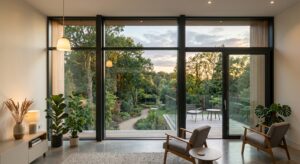
Choosing a modern window design requires balancing appearance, performance, functionality, and cost.
Consider Your Home’s Architecture
Start with the home’s existing architectural style, proportions, exterior materials, and rooflines. The window design should look intentional and work with the structure rather than appearing disconnected from Modern window design.
Choose the Right Size and Shape
Window size and shape influence daylight, ventilation, views, privacy, and exterior appearance. Large windows can provide impressive views and daylight, but their orientation and exposure to sunlight should be considered before installation.
Compare Glass and Frame Options
Do not compare windows only by color or appearance. Check the available performance information, including U-factor, solar heat gain coefficient, visible transmittance, air leakage, and other applicable ratings. For energy-conscious projects, look for independently verified performance information where available.
Consider Maintenance and Durability
Different frame materials require different levels of maintenance. Wood generally needs more protection and maintenance than uPVC or fiberglass. Aluminum is durable but requires attention to thermal performance. Fiberglass can provide strength and relatively low maintenance.
Set a Practical Budget
The initial window price is only part of the total project cost. Consider the cost of the window, glazing, installation, finishing work, possible structural modifications, and future maintenance.
An energy-efficient window can provide long-term benefits, but the financial value depends on the home’s climate, existing windows, energy prices, product performance, and installation quality.
Final Thoughts
The right modern window design can bring together style and practical performance. Casement, sliding, awning, picture, bay, bow, and large-format windows offer different combinations of ventilation, views, daylight, privacy, and appearance.
Modern window selection is about more than choosing a trendy frame or the largest possible pane of glass. Glazing, frame material, solar exposure, climate, installation quality, maintenance, and room requirements all affect the final result.
Energy-efficient technologies such as insulated glazing, low-emissivity coatings, gas-filled spaces, and improved frames can reduce unwanted heat transfer when properly matched to the building and climate.
FAQs About Modern Window Design
What is the most popular modern window design?
There is no single modern window design that is best or most popular for every home. Casement, sliding, awning, picture, bay, bow, and large-format windows are all established residential options.
Which modern windows are best for energy efficiency?
Energy performance depends on the complete window rather than Modern window design operating style alone. Important factors include U-factor, solar heat gain coefficient, glazing layers, low-emissivity coatings, frame construction, gas fills, and installation quality.
What window design makes a room look bigger?
Large picture windows, wide glazing arrangements, and floor-to-ceiling windows can create a stronger visual connection with the outdoors and make a room feel more open.
Are black-frame windows still popular?
Black and other dark frame finishes remain an established option for contemporary residential designs. They can create contrast and emphasize clean architectural lines.
How do I choose the best modern windows for my home?
Start by considering the home’s architecture, climate, room requirements, privacy needs, ventilation goals, maintenance expectations, and budget. Then compare window types, frame materials, glazing, and performance ratings.