Communication is an important part of every successful organization. Businesses depend on the exchange of information to manage employees, coordinate projects, serve customers, and make informed decisions. Whether a company operates from a small office or manages several departments across different locations, people need clear communication to understand their responsibilities and work toward shared objectives.
This is where business communication plays an important role. It allows managers to explain expectations, employees to exchange ideas, and customers to receive accurate information about products and services. It also helps organizations address problems, organize daily activities, and maintain professional relationships.
Understanding What is business communication is useful for business owners, employees, managers, entrepreneurs, and students. It involves much more than sending emails or attending meetings. Effective communication requires clear messages, active listening, appropriate communication channels, and constructive feedback.
What Is Business Communication?
Business communication is the process of sharing information, ideas, instructions, opinions, and feedback for professional purposes. It takes place within an organization and between a business and external groups, including customers, suppliers, and business partners.
Definition and Meaning of Business Communication
The meaning of business communication goes beyond ordinary conversations. What is business communication refers to professional interactions that help individuals and organizations exchange relevant information.
It can happen through spoken conversations, written documents, visual presentations, and digital platforms. The appropriate method depends on the message, audience, and situation. Common examples include employee instructions, business emails, customer conversations, company announcements, project reports, and management meetings.
Main Purpose of Business Communication
The main purpose of business communication is to support the exchange of information and help people work toward common business goals. Its important functions include sharing updates, explaining responsibilities, coordinating departments, resolving workplace problems, and maintaining professional relationships.
How Business Communication Works in an Organization
Business communication generally follows a process involving a sender, message, communication channel, receiver, and feedback. The sender prepares information and chooses an appropriate method to deliver it. The receiver interprets the message and responds when necessary.
Why Is Business Communication Important for Business Success?
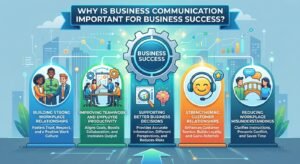
Business communication helps organizations coordinate their activities, maintain relationships, and make decisions using relevant information. Without clear communication, employees may misunderstand instructions, customers may receive incomplete answers, and departments may struggle to work together.
Building Strong Workplace Relationships
Respectful communication helps employees develop positive professional relationships. When colleagues listen to one another, exchange ideas, and discuss concerns honestly, they can develop greater understanding and cooperation.
Managers can also build trust by explaining decisions, providing clear expectations, and treating employees respectfully.
Improving Teamwork and Employee Productivity
Employees often depend on information from colleagues and other departments to complete their responsibilities.
Supporting Better Business Decisions
Managers need accurate information to evaluate business situations and choose appropriate actions. Communication helps bring different perspectives together, although the final decision still depends on careful evaluation of the available evidence.
Strengthening Customer Relationships
Customers expect businesses to answer questions, explain services, and respond professionally to problems. When employees communicate clearly and listen carefully, customers can better understand available products, policies, and solutions.
Reducing Workplace Misunderstandings
Unclear instructions and incomplete messages can create mistakes and delays. Businesses can reduce these problems by explaining responsibilities, confirming important details, documenting decisions, and encouraging employees to ask questions.
What Are the Main Types of Business Communication?
Businesses use different communication types depending on their objectives and audiences. The main forms include verbal, nonverbal, written, visual, and digital communication.
Verbal Communication
Verbal communication involves exchanging information through spoken language. What is business communication includes meetings, telephone conversations, interviews, presentations, and everyday workplace discussions.
Its main advantage is that participants can ask questions and receive immediate responses. However, important spoken instructions may need written confirmation to prevent misunderstandings.
Nonverbal Communication
Nonverbal communication involves conveying messages without relying entirely on words. It includes facial expressions, gestures, posture, eye contact, and tone of voice.
However, nonverbal signals can have different meanings across cultures, so professionals should avoid making assumptions based on individual gestures.
Written Communication
Written communication involves sharing information through emails, letters, reports, notices, proposals, and other documents.
What is business communication is particularly useful when businesses need to provide detailed instructions or maintain a record of important information. Clear writing, appropriate language, and accurate details help readers understand the intended message.
Visual Communication
Visual communication uses charts, graphs, diagrams, images, and presentations to explain information. Visual materials should present accurate information and include clear labels so audiences can understand them correctly.
Digital Communication
Digital communication involves using electronic devices and online platforms to exchange information. Examples include email, instant messaging, video conferencing, shared documents, and customer support platforms.
These methods allow employees to communicate across different locations, although businesses should consider privacy, security, and information overload.
What Are the Different Methods of Business Communication?
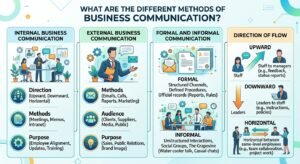
Business communication can also be classified according to the people involved and the direction in which information travels.
Internal Business Communication
Internal communication takes place among employees, managers, and departments within an organization. Examples include staff meetings, internal emails, employee announcements, project updates, and management instructions.
What is business communication helps employees understand company policies, coordinate responsibilities, and share workplace information.
External Business Communication
External communication occurs between a business and people or organizations outside its workforce. These groups may include customers, suppliers, investors, government agencies, and business partners.
Examples include customer service conversations, supplier agreements, business proposals, and public announcements. Professional external communication helps organizations maintain relationships and explain their products or services accurately.
Formal and Informal Communication
Formal communication follows established workplace procedures and professional channels. Examples include official emails, reports, company policies, and scheduled meetings.
Informal communication happens through everyday conversations between colleagues. It may involve quick questions, casual discussions, or exchanging ideas during breaks. Both forms have a place in the workplace, but important decisions and instructions should be communicated through appropriate official channels.
Upward, Downward, and Horizontal Communication
Upward communication moves from employees toward managers and senior leaders. It includes feedback, suggestions, progress reports, and workplace concerns.
Downward communication moves from management toward employees. What is business communication includes instructions, company announcements, policies, and performance expectations.
Horizontal communication occurs between employees or departments at similar organizational levels. For example, sales and marketing managers may coordinate a promotional campaign.
Common Examples of Business Communication
Business communication happens in everyday professional activities. Some interactions are planned, while others take place when employees or customers need information.
Business Meetings and Team Discussions
Meetings allow employees and managers to discuss projects, review progress, solve problems, and make decisions. A useful meeting should have a clear purpose and give participants an opportunity to contribute. An agenda and written summary can help everyone understand the agreed actions.
Professional Emails and Business Letters
Emails and business letters are used to communicate instructions, requests, announcements, and professional information.
A good business email should have a relevant subject line, clear purpose, appropriate greeting, organized information, and professional closing. Important details such as dates, names, and attachments should be checked before sending.
Customer Service and Client Conversations
Customer service communication involves answering questions, explaining products, and helping customers resolve problems. Professional service requires patience, accurate information, and clear explanations.
Business Reports and Presentations
Reports and presentations help organizations communicate findings, performance information, and recommendations.
A financial report may explain business expenses, while a marketing presentation may summarize campaign results. Both should organize information logically and present accurate details.
Essential Skills for Effective Business Communication
Effective communication requires practical skills that help people exchange information and understand different perspectives.
Active Listening Skills
Active listening means paying attention to the speaker instead of preparing a response before they finish. Employees can improve listening by avoiding interruptions, asking relevant questions, and confirming important details.
Clear and Professional Writing
Professional writing helps businesses communicate information accurately through emails, reports, and other documents. Using simple language, organized paragraphs, correct grammar, and a respectful tone makes messages easier to understand.
Effective Speaking and Presentation Skills
Speaking skills help professionals explain ideas during meetings, interviews, and presentations. Preparation, logical organization, clear explanations, and appropriate examples can make professional presentations more effective.
Emotional Intelligence and Empathy
Emotional intelligence involves recognizing and managing emotions while understanding other people’s perspectives. Empathy helps employees respond respectfully to colleagues and customers, particularly during difficult conversations.
Feedback and Conflict Resolution
Constructive feedback explains what is working well and what may need improvement. Conflict resolution involves listening to the people involved, identifying the actual problem, discussing possible solutions, and agreeing on appropriate next steps.
Common Challenges in Business Communication
Even well-managed organizations can experience communication problems. Identifying these challenges helps businesses develop better communication practices.
Language and Cultural Differences
Employees and customers may have different languages, cultural backgrounds, and communication preferences. Using clear language, explaining unfamiliar terms, and respecting cultural differences can reduce confusion.
Poor Listening and Unclear Messages
Distractions and incomplete instructions can prevent employees from understanding important information. Businesses should encourage careful listening, clear explanations, and questions when something is uncertain.
Communication Barriers in Remote Teams
Remote employees may work in different locations and time zones, making immediate conversations difficult. Clear schedules, documented decisions, and suitable online communication platforms can help remote teams coordinate their activities.
Information Overload and Miscommunication
Too many emails, notifications, and updates can make it difficult to identify important information. Businesses should organize communication channels, limit unnecessary messages, and highlight important instructions and deadlines.
Lack of Employee Feedback
When employees do not have opportunities to express concerns, managers may miss important information about workplace problems. Regular discussions, employee surveys, and appropriate feedback channels can help address this issue.
How to Improve Business Communication in the Workplace
Improving business communication requires consistent effort from employees and management. Simple changes can make workplace information easier to understand and use.
Use Clear and Simple Language
Avoid unnecessary jargon and vague instructions. Explain the message’s purpose, required actions, and relevant deadlines so recipients know what is expected.
Choose the Right Communication Channels
Select a communication method according to the situation. Email may suit detailed instructions, while a meeting may be better for complex discussions or collaborative decisions.
Encourage Open and Honest Discussions
Create appropriate opportunities for employees to ask questions, share suggestions, and report problems without unnecessary barriers.
Use Modern Communication Tools
Businesses can use approved email, messaging, video conferencing, and project management platforms to organize information and coordinate work. Choose tools that meet actual business requirements rather than introducing unnecessary systems.
Provide Regular Feedback and Follow-Ups
Regular feedback helps employees understand their progress and identify areas for improvement. Follow up on important assignments, clarify outstanding questions, and communicate changes when necessary.
The Role of Technology in Modern Business Communication
Technology has changed how businesses share information and coordinate activities. Digital platforms allow employees to communicate across locations and work together on shared projects.
Email and Instant Messaging Platforms
Email supports formal communication and detailed information sharing, while instant messaging is useful for short questions and routine updates. Businesses should establish appropriate rules for professional communication and confidential information.
Video Conferencing and Virtual Meetings
Video conferencing allows remote employees and business partners to communicate through live audio and video. Preparing an agenda, checking equipment, and summarizing decisions can make virtual meetings more productive.
Project Management and Collaboration Tools
Project management tools help teams assign responsibilities, organize deadlines, share documents, and monitor progress. They are especially useful when several employees or departments contribute to the same project.
Artificial Intelligence in Business Communication
AI-powered tools can assist with drafting emails, summarizing documents, translating messages, and answering routine customer questions.
However, AI-generated information should be reviewed for accuracy, relevance, and appropriate tone. Employees should also protect confidential information and use human judgment when handling important business decisions.
Read more: Globex HRMS Software Review: Everything You Need to Know
Benefits of Effective Business Communication
Effective communication supports daily operations and helps organizations maintain professional relationships.
Increased Employee Productivity
Clear instructions and regular updates help employees understand their responsibilities and organize their work.
Better Customer Satisfaction
Accurate information, polite responses, and helpful customer support can improve the overall service experience.
Stronger Team Collaboration
Sharing information and coordinating responsibilities helps employees work toward common project objectives.
Improved Business Growth and Performance
Communication helps organizations understand customer needs, coordinate strategies, identify problems, and make informed decisions. Although it cannot guarantee business growth, it supports the activities required to manage an organization effectively.
Final Thoughts
Understanding What is business communication helps explain why information exchange is essential to every organization. It connects employees, managers, customers, and business partners while supporting everyday activities and long-term objectives.
From professional emails and workplace meetings to customer service and digital collaboration, every communication method has a specific purpose. Businesses need to choose appropriate channels, share accurate information, and encourage feedback to make their interactions more effective.
FAQs About What Is Business Communication
1. What Is Business Communication in Simple Words?
Business communication is the exchange of information, ideas, instructions, and feedback for professional purposes. It happens between employees, managers, customers, suppliers, and other business-related groups.
2. What Are the Four Main Types of Business Communication?
Four commonly discussed forms are verbal, nonverbal, written, and visual communication. Digital communication is another important method of exchanging professional information through electronic platforms.
3. Why Is Business Communication Important for Business Success?
It helps employees coordinate their responsibilities, managers communicate expectations, and businesses maintain customer relationships. Effective communication can also reduce misunderstandings and support informed decisions.
4. What Are Some Common Examples of Business Communication?
Common examples include business meetings, professional emails, customer service conversations, employee instructions, project reports, presentations, and communication with suppliers.
5. How Can a Business Improve Its Communication Effectiveness?
A business can improve communication by using clear language, choosing suitable channels, encouraging employee feedback, practicing active listening, and documenting important decisions.