A well-planned Bedroom wall colour combination plays a very important role in interior design because it directly affects how a bedroom looks, feels, and functions in daily life. The bedroom is not just a sleeping space but also a personal retreat where people relax, reduce stress, and recharge mentally after a long day.
That is why choosing the right colours for the walls is not only about decoration but also about comfort, mood balance, and lifestyle improvement. In interior design practice, wall colours are considered the foundation of the entire room because they influence all other design elements such as lighting, furniture, and décor style.
Why Bedroom Wall Colours Are Important for Home Design
Bedroom wall colours are one of the most important elements of home interior design because they create the visual foundation of the room and define its overall style and atmosphere. Every furniture piece, decoration item, and lighting setup looks better or worse depending on the wall colour, which makes it a critical design decision.
A carefully selected Bedroom wall colour combination helps create harmony and balance in the room, making the space feel well-organized and visually appealing. On the other hand, poorly chosen colours can make even expensive interiors look uncoordinated or uncomfortable.
How Colour Choices Impact Mood, Sleep, and Comfort
Colours have a strong psychological effect on human emotions, and this is especially important in bedrooms where relaxation and sleep quality matter the most. Soft and cool colours like blue and green are scientifically associated with calmness and reduced stress levels, which helps the mind relax and supports deeper sleep.
Psychology of Bedroom Wall Colours
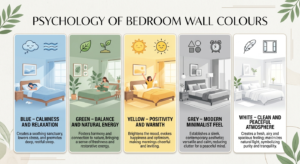
The psychology of colour is widely used in interior design because each colour triggers a specific emotional response and influences how people feel inside a space. Bedrooms especially require calming and balanced colours because the main purpose of this room is rest and relaxation.
A properly designed Bedroom wall colour combination based on colour psychology ensures that the environment supports comfort, sleep quality, and emotional stability throughout the day and night.
Blue – Calmness and Relaxation
Blue is one of the most recommended bedroom colours because it naturally reduces stress, lowers heart rate, and creates a peaceful sleeping environment. Light blue tones are especially effective for bedrooms because they feel soft, airy, and relaxing, while deeper shades like navy add depth and sophistication when used as accents.
Green – Balance and Natural Energy
Green represents nature, balance, and freshness, making it an excellent choice for bedrooms where a calm and refreshing atmosphere is desired. It helps reduce eye strain and creates a sense of harmony that feels soothing after a long day. Soft green shades like sage or olive are commonly used in modern interior design as part of a natural.
Yellow – Positivity and Warmth
Yellow is associated with happiness, energy, and optimism, but in bedroom design it is best used in soft or muted tones rather than bright shades. Soft yellow adds warmth and brightness without disturbing relaxation, especially when balanced with neutral colours. It works best as an accent in a Bedroom wall colour combination rather than the dominant shade.
Grey – Modern Minimalist Feel
Grey is a neutral and versatile colour widely used in modern interior design because it creates a clean, elegant, and balanced look. It works well with both warm and cool tones, making it a strong base colour for any Bedroom wall colour. Light grey gives a soft modern feel, while dark grey adds depth and luxury when used correctly.
White – Clean and Peaceful Atmosphere
White is a timeless interior colour that represents simplicity, cleanliness, and openness, making it ideal for bedrooms of all sizes. It reflects natural light, making rooms appear brighter and more spacious, which is especially useful in small bedrooms. White is often used as a base colour because it blends easily with other shades.
Key Factors to Choose the Perfect Bedroom Wall Colour Combination
Choosing the right requires careful consideration of practical design elements such as room size, lighting conditions, furniture style, and personal preference. Every bedroom is different, so the same colour combination may look different depending on these factors. A well-balanced approach ensures that the final design is both visually attractive and functionally comfortable for long-term use.
Room Size and Space Illusion
Room size plays a major role in colour selection because light colours make a room appear larger and more open, while dark colours create a cozy and enclosed atmosphere. For small bedrooms, soft shades like white, cream, or pastel tones are recommended, while larger rooms can handle deeper colours more effectively. This balance is essential in creating a visually comfortable Bedroom wall colour combination.
Lighting Conditions (Natural vs Artificial Light)
Lighting has a strong impact on how wall colours appear in real life because natural sunlight enhances brightness and reveals true colour tones, while artificial lighting can change warmth and saturation. This is why it is important to test paint samples in different lighting conditions before finalizing to avoid unexpected results.
Furniture and Interior Theme Matching
Wall colours must match furniture style, material, and finish to create a balanced interior design. Wooden furniture works well with warm earthy tones, while modern furniture pairs better with neutral shades like grey, white, or beige.
Personal Lifestyle and Comfort Preference
Every individual has different lifestyle needs and emotional preferences, so bedroom colours should reflect personal comfort rather than just trends. Some people prefer calm and soft tones for relaxation, while others prefer slightly bold accents for a stylish look.
Best Modern Bedroom Wall Colour Combinations
Modern interior design focuses on simplicity, balance, and functionality, where colour combinations are chosen to create a clean and stylish appearance without overwhelming the space. A good Bedroom wall colour in modern homes usually includes neutral base colours with soft accent shades that add depth and character.
White and Sky Blue for a Fresh and Calm Look
White and sky blue create a light and refreshing atmosphere that feels peaceful and open, making it ideal for bedrooms focused on relaxation. White keeps the space bright and spacious, while sky blue adds a soft calming effect, making it a highly effective Bedroom colour combination.
Grey and Mustard Yellow for a Stylish Modern Contrast
Grey and mustard yellow form a balanced modern contrast where grey provides stability and mustard yellow adds warmth and energy. This combination is widely used in contemporary interiors because it creates a stylish yet comfortable environment in a Bedroom wall colour combination.
Beige and Chocolate Brown for Warm Elegance
Beige and chocolate brown create a warm, natural, and cozy atmosphere that feels both elegant and grounded. This combination works well in both modern and traditional interiors, making it a timeless Bedroom wall colour.
Soft Pink and White for a Romantic Soft Interior
Soft pink and white together create a gentle, calming, and aesthetically pleasing environment that feels light and peaceful. This combination is often used in bedrooms where softness and comfort are priorities in a Bedroom colour.
Olive Green and Cream for a Natural Organic Feel
Olive green and cream create a natural, earthy atmosphere inspired by nature, bringing freshness and balance into the bedroom. This combination is ideal for people who prefer organic and calming designs in a Bedroom wall colour.
Trending Bedroom Wall Colour Combinations in 2026
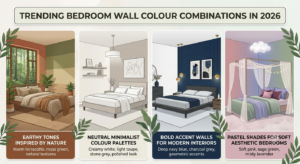
Interior design trends in 2026 focus on natural tones, simplicity, and emotional comfort rather than overly bold or complex designs. A modern Bedroom wall colour now emphasizes earthy shades, neutral palettes, and soft aesthetic colours that create peaceful living spaces.
Earthy Tones Inspired by Nature
Earthy tones like clay, terracotta, sand, and olive green are becoming increasingly popular because they create a grounded and natural feeling. These colours make bedrooms feel warm, stable, and connected to nature, making them a strong trend in Bedroom colour combination design.
Neutral Minimalist Colour Palettes
Neutral palettes such as white, grey, and beige remain timeless because they offer flexibility, simplicity, and elegance in interior design. They are widely used in modern homes due to their clean and balanced appearance in a Bedroom wall colour combination.
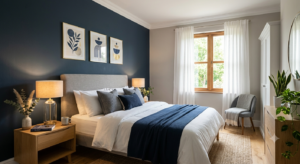
Bold Accent Walls for Modern Interiors
Accent walls use one strong colour on a single wall while keeping the rest neutral, creating focus and visual interest without overwhelming the space. This technique is widely used in modern Bedroom colour designs.
Pastel Shades for Soft Aesthetic Bedrooms
Pastel shades like mint, lavender, and peach create soft, dreamy, and relaxing bedroom environments that feel light and modern. These colours are popular in aesthetic interior styles and fit well in a Bedroom wall colour.
Bedroom Wall Colour Ideas for Small Bedrooms
Small bedrooms require careful colour planning because wrong choices can make the space feel tighter, while correct choices can make it look larger and more open. A smart Bedroom wall colour combination focuses on maximizing light, space perception, and simplicity.
Light Colours to Create a Spacious Effect
Light colours reflect more light, making small bedrooms appear larger, brighter, and more open. This is a fundamental principle in designing an effective Bedroom combination.
Dual-Tone Wall Techniques for Depth
Dual-tone walls use two complementary shades to create depth and dimension without making the room feel heavy or crowded. This technique improves visual balance in a wall colour combination.
Smart Colour Tricks for Compact Spaces
Using vertical patterns, light ceilings, and soft contrasts helps create the illusion of height and space in compact bedrooms. These tricks enhance any wall colour combination.
Luxury Bedroom Wall Colour Combination Ideas
Luxury bedrooms focus on rich tones, balanced contrast, and elegant design elements that create a premium and sophisticated atmosphere. A luxury it often includes deep colours paired with metallic or neutral accents.
Navy Blue and White for Premium Elegance
Navy blue and white create a royal and elegant look where navy adds depth and white keeps the space clean and balanced, making it a classic luxury Bedroom wall colour.
Charcoal Grey and Gold for Luxury Interior Style
Charcoal grey provides a strong modern base while gold accents add richness and sophistication, creating a high-end interior feel in a Bedroom colour.
Black and Beige for a High-End Modern Look
Black and beige together create a bold yet balanced contrast that feels modern, stylish, and luxurious when used properly in a wall colour combination.
Common Bedroom Colour Combination Mistakes to Avoid
Many people make design mistakes when choosing bedroom colours, which affects the overall look and comfort of the space. Avoiding these mistakes ensures a successful Bedroom wall colour combination.
Overusing Dark Colours in Small Rooms
Using too many dark colours in a small bedroom can make the space feel even more confined and visually heavy. It reduces natural brightness and makes the room appear smaller than it actually is.
Ignoring Lighting Effects on Colours
Lighting plays a very important role in how wall colours appear in a real room. A colour that looks perfect in daylight may look completely different under artificial lighting.
Poor Matching of Furniture and Wall Shades
When wall colours do not match the furniture style or tone, the room loses visual harmony and balance. This creates a confusing and less attractive interior appearance.
Using Too Many Conflicting Colours
Using too many different colours in one bedroom can create visual clutter and reduce the peaceful atmosphere. It makes the space look disorganized instead of calm and stylish.
Expert Tips for a Stylish Bedroom Interior
A stylish bedroom design depends on balance, simplicity, and thoughtful colour selection that enhances both beauty and comfort. A properly planned Bedroom wall colour combination ensures the room feels modern, relaxing, and visually pleasing.
Interior design is not about using many colours but about using the right colours in the right proportion. When colours, textures, and furniture work together, the bedroom becomes a well-balanced and comfortable space.
Use Accent Walls for Focus
Accent walls help create a strong visual focal point in the bedroom without overwhelming the overall design. They allow one wall to stand out while keeping the rest of the space calm and balanced. This improves the effectiveness of a Bedroom wall colour.
Balance Wall Colours with Soft Furnishings
Soft furnishings like curtains, bed sheets, and rugs should match or complement the wall colours. This creates a unified and well-coordinated interior look. A balanced Bedroom wall colour combination always considers fabric harmony.
Add Texture with Paint, Wallpaper, or Panels
Textures add depth and dimension to bedroom walls, making the space more visually interesting and stylish. They prevent walls from looking flat or boring. This enhances the overall Bedroom wall colour design.
Keep a Consistent Colour Theme Throughout
Maintaining a consistent colour theme ensures visual harmony and a professional interior appearance. It helps all design elements feel connected and well-planned. This strengthens any Bedroom wall colour strategy.
Final Verdict
A carefully designed Bedroom wall colour combination plays a crucial role in creating a modern, comfortable, and stylish bedroom that supports relaxation, emotional balance, and aesthetic appeal. By understanding colour psychology, lighting effects, room size considerations, and modern design trends, anyone can create a bedroom that feels both functional and visually beautiful. The right colour combination transforms an ordinary room into a peaceful and elegant personal space that enhances daily living experience.
Pingback: Seasonal Home Maintenance Checklist: Complete Year-Round Guide