Kitchen tiles are not only decorative. The right tile can help create a practical surface that suits the location where it is installed. Ceramic and porcelain tiles are commonly used for kitchen walls, backsplashes, and floors, while glass, natural stone, and other tile materials are also available for specific applications.
When choosing Modern kitchen tiles design, you should consider more than color. Tile material, size, surface finish, grout, installation area, cleaning requirements, and the rest of the kitchen all matter.
We will find 35 tile ideas covering simple, patterned, luxury, natural, and contemporary styles. You will also learn how to choose tiles for different kitchen areas and how to maintain them properly.
What Is Modern Kitchen Tiles Design?
Modern kitchen tiles design describes contemporary ways of choosing, combining, and arranging kitchen tiles. It can involve the tile’s color, shape, size, pattern, texture, finish, or installation layout.
There is no single tile that defines a modern kitchen. A plain rectangular tile can look contemporary when used with a simple layout, while a geometric or patterned tile can create a more decorative modern appearance.
What Makes a Kitchen Tile Design Look Modern?
A modern appearance often comes from clean lines, controlled colors, simple patterns, large formats, geometric shapes, or contemporary surface finishes.
Rectangular, square, and hexagonal tiles are available in many collections. Established layouts include brickwork, herringbone, basketweave, checkerboard, diamond, and hexagon patterns.
The surrounding kitchen is also important. Cabinets, countertops, flooring, lighting, appliances, grout color, and tile finish all contribute to the final appearance.
Modern vs. Traditional Kitchen Tile Designs
Modern and traditional kitchens can use many of the same tile materials. The difference is usually created by the combination of color, pattern, size, finish, and surrounding materials.
For example, a rectangular ceramic tile can be used in a classic running-bond arrangement or installed in a more contemporary vertical layout. A natural stone tile can also work in different design styles depending on its color and installation pattern.
Why Tile Choice Matters in a Kitchen
The installation location should be considered before buying any tile. Floor tiles need to be appropriate for flooring and the expected traffic and conditions. Wall and backsplash tiles have different requirements because they are not subjected to normal floor traffic.
Porcelain has a water absorption rate of 0.5% or lower under the applicable ASTM classification, while ceramic tiles can have different absorption characteristics. This is one reason porcelain is commonly considered for areas where lower water absorption is important.Always check the manufacturer’s technical information for the exact product rather than assuming all tiles perform identically.
35 Modern Kitchen Tiles Design Ideas
Here are 35 practical tile ideas that can work with different kitchen layouts and decorating styles.
Minimal and Timeless Tile Designs
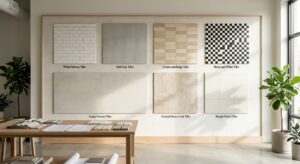
1. White Subway Tiles
White subway tiles are rectangular tiles commonly installed in a brick or running-bond pattern. They are a straightforward choice for a kitchen backsplash because the shape is simple and the white color can work with many cabinet and countertop combinations.
For a subtle appearance, white grout can reduce the visual separation between tiles. A contrasting grout can make the individual rectangular shapes more noticeable.
2. Soft Gray Tiles
Soft gray tiles provide a neutral alternative to white. They can be used with white cabinets, wood-look materials, black fixtures, or other neutral colors. Gray ceramic and porcelain tiles are available in numerous sizes and finishes.
For Modern kitchen tiles design, soft gray is useful when you want color without using a highly saturated shade.
3. Cream and Beige Tiles
Cream and beige tiles provide warm neutral tones. They can be used on walls, backsplashes, or floors when the selected product is approved for that application. They also work well with kitchens containing wood or warm-colored cabinetry.
4. Black-and-White Tiles
Black-and-white tiles create a clear contrast between light and dark surfaces. The combination can be used in a checkerboard floor, patterned backsplash, border, or simple two-color arrangement.
Because the colors are highly contrasting, the rest of the kitchen can be kept relatively simple if you want the tile to remain the main feature.
5. Large-Format Tiles
Large-format tiles are available in substantially larger dimensions than many traditional kitchen tiles. Using larger pieces can reduce the number of grout joints across a given area. However, large tiles also require appropriate substrate preparation, handling, layout, and installation techniques.
They can be used on floors, walls, backsplashes, and other surfaces when the particular product is suitable.
6. Neutral Stone-Look Tiles
Stone-look tiles are manufactured to reproduce the appearance of natural stone. Neutral versions commonly use combinations of beige, cream, gray, taupe, or brown. Porcelain is available in stone-look designs and can provide a stone-inspired appearance while retaining the characteristics of manufactured tile.
This Modern kitchen tiles design works well when you want a natural visual effect without necessarily using natural stone.
7. Simple Matte Tiles
Matte tiles have a low-reflective surface rather than a highly glossy appearance. They are available in many colors, shapes, and materials. A simple matte tile can create a restrained appearance when combined with plain cabinetry and a limited color palette.
Stylish Pattern and Shape Ideas
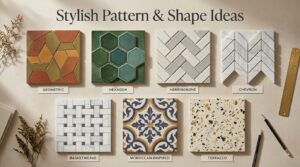
8. Geometric Tiles
Geometric tiles use recognizable shapes and repeated arrangements. Squares, rectangles, hexagons, diamonds, and other shapes can be arranged into different patterns. The geometric effect can be subtle when one color is used or more noticeable when several colors are combined.
9. Hexagon Tiles
Hexagon tiles have six sides and are commonly available in ceramic, porcelain, stone, and mosaic formats.
They can be installed in one color for a simple appearance or combined with different colors for a stronger pattern.
Hexagon layouts are established tile patterns and are available for wall, backsplash, and other suitable applications.
10. Herringbone Tiles
Herringbone is a recognized layout made by placing rectangular tiles in an interlocking zigzag arrangement.
It can be created with subway-style tiles, wood-look planks, stone-look tiles, or other rectangular formats. The same tile can therefore produce a very different appearance simply by changing its layout.
11. Chevron Tiles
Chevron layouts create connected V-shaped lines. Chevron and herringbone can look similar from a distance, but their construction is different. In a chevron arrangement, the angled ends of the tiles meet to create continuous points. This pattern can be used as a decorative backsplash or feature surface.
12. Basketweave Tiles
Basketweave patterns combine tile pieces to create a woven appearance. The pattern can be made using different tile sizes and shapes. Basketweave layouts are available for mosaics and larger tile arrangements.
For Modern kitchen tiles design, a basketweave pattern can provide visual detail without requiring a highly colorful tile.
13. Moroccan-Inspired Patterned Tiles
Moroccan-inspired tiles often feature repeating geometric or decorative motifs. They can add strong visual character to a backsplash or feature area. Because these tiles can be visually detailed, they are often easier to balance with simpler cabinets and countertops.
14. Terrazzo-Style Tiles
Terrazzo-style tiles reproduce the appearance of terrazzo, which is traditionally associated with chips or aggregate set within a binder.
Manufactured tiles can reproduce this type of speckled appearance through their surface design. They are available in different background colors and can be used to introduce patterns without relying on a conventional geometric layout.
Modern Luxury Tile Designs
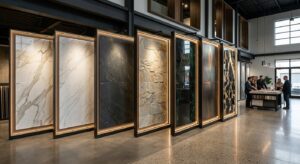
15. Marble-Look Tiles
Marble-look tiles reproduce the visual effect of marble veining. Porcelain and ceramic products can be manufactured with marble-inspired patterns. This allows homeowners to choose a manufactured tile with a marble appearance rather than using natural marble. The exact veining, background color, finish, and variation differ between products.
16. Calacatta-Style Tiles
Calacatta-style tiles are inspired by the appearance of Calacatta marble, commonly associated with a light background and noticeable veining. Manufactured porcelain tiles can reproduce this visual style.
When selecting one, compare an actual sample with the cabinets and countertop because printed or photographed colors can look different from the installed product.
17. Dark Stone-Look Tiles
Dark stone-look tiles use deep gray, charcoal, black, or similar tones. They can be used for a backsplash, feature wall, or floor when the particular tile is designed for that application.
Dark tile can create strong contrast against lighter surfaces, but the final appearance also depends on lighting, grout, cabinet color, and tile finish.
18. Glossy Porcelain Tiles
Glossy porcelain tiles have a reflective surface. They can be used on suitable walls and backsplashes, where their reflective finish can interact with surrounding light.
Porcelain is a specialized type of ceramic tile made from selected clays and fired under specific manufacturing conditions. It is denser and has lower water absorption than many standard ceramic tiles.
19. Metallic-Effect Tiles
Metallic-effect tiles are manufactured with surfaces designed to resemble materials such as steel, copper, brass, or other metals.
They are commonly used as decorative accents rather than requiring the entire kitchen to have a metallic surface.
A metallic-effect backsplash can become the main visual feature when the surrounding materials are kept simple.
20. Textured Stone Tiles
Textured tiles have a physically varied surface rather than only a printed pattern. Stone-inspired textures can add depth and tactile interest. However, textured surfaces can collect more residue than smooth surfaces, so cleaning requirements should be considered before installation near a cooking area.
21. High-Contrast Tiles
High-contrast tile designs use noticeably different colors or tones. Examples include black and white, dark gray and light gray, or dark green and light neutral colors.
For Modern kitchen tiles design, contrast can be introduced through the tile itself or through the combination of tile and grout.
Warm and Natural Kitchen Tile Ideas
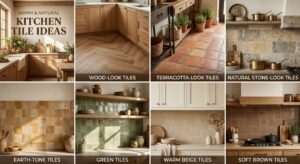
22. Wood-Look Tiles
Wood-look tiles are manufactured to reproduce the appearance of wood grain. Porcelain wood-look tiles are available in plank-like formats and can be used for suitable kitchen floors. They provide a wood-inspired appearance while being manufactured as tile rather than natural wood. The exact performance depends on the product, installation, and maintenance.
23. Terracotta-Look Tiles
Terracotta-look tiles reproduce the warm appearance associated with terracotta. They can feature orange, reddish-brown, brown, or other earthy tones. Manufactured versions can provide the visual character of terracotta while offering the properties of the selected tile material.
24. Natural Stone-Look Tiles
Natural stone-look tiles imitate the appearance of materials such as slate, limestone, travertine, or other stones.
This should not be confused with actual natural stone. Natural stone is a different material category and can require different maintenance, including sealing depending on the stone and application.
25. Earth-Tone Tiles
Earth-tone tiles include colors such as beige, tan, brown, muted orange, and warm gray. These colors can work with wood cabinetry and other natural-looking materials. They are also useful when you want a warm kitchen without using a bright or highly saturated tile color.
26. Green Tiles
Green tiles are available in light, muted, dark, and highly saturated shades. A green backsplash can add color while leaving the rest of the kitchen relatively neutral.
For a balanced Modern kitchen tiles design, the green tile can be paired with simple cabinet colors and a restrained countertop.
27. Warm Beige Tiles
Warm beige tiles offer a neutral color with a warmer undertone. They can be combined with white cabinetry, wood-look surfaces, brown accents, or darker countertops.
The appearance of beige can vary significantly under different lighting conditions, so viewing a physical sample is helpful before making a final selection.
28. Soft Brown Tiles
Soft brown tiles can introduce a warm, earthy color into the kitchen. They can work with wood-inspired materials and neutral cabinets. Brown tiles are available in different materials, sizes, patterns, and finishes. The right choice depends on whether the tile is intended for a backsplash, wall, or floor.
Creative and Contemporary Tile Ideas

29. Vertical Subway Tiles
Traditional subway tiles are often installed horizontally, but rectangular tiles can also be arranged vertically. Changing the direction changes the visual rhythm of the surface without requiring a different tile shape.
This Modern kitchen tiles design is particularly useful when you want a familiar rectangular tile to have a less traditional appearance.
30. Two-Tone Tile Combinations
Two-tone tile designs combine two colors within one surface. The colors can be arranged in alternating rows, geometric patterns, borders, or other planned layouts.
Using two related shades creates a quieter result, while strong contrast creates a more noticeable feature.
31. Accent Backsplash Tiles
An accent backsplash uses a different tile, color, pattern, or texture to create a focal area. The backsplash can become the main decorative element while the floor and other walls remain simpler.
This approach is useful when you want visual interest without covering the entire kitchen in a bold pattern.
32. Floor-to-Ceiling Tile Designs
Tile can be extended across a larger vertical wall area where the installation and wall surface are appropriate. A continuous tiled wall can create a strong visual backdrop behind a countertop, range hood, or open shelving.
The selected tile must be suitable for wall installation, and the installation method should follow the product manufacturer’s requirements.
33. Mixed-Size Tile Patterns
Mixed-size layouts combine tiles with different dimensions to create a planned arrangement. Established tile patterns include combinations such as basketweave, brickwork, checkerboard, and other multi-size layouts.
This Modern kitchen tiles design can add visual complexity while still using relatively simple tile colors.
34. Colorful Statement Tiles
Statement tiles use a strong color, unusual pattern, or distinctive surface as the main feature. Blue, green, terracotta, yellow, black, and other colors can all be used depending on the kitchen’s existing palette. Before choosing a strong color, compare the tile with the cabinets, countertop, lighting, and flooring.
35. Textured Feature-Wall Tiles
A textured feature wall uses tiles with raised, fluted, linear, or stone-inspired surfaces. These tiles create interest through physical texture rather than depending only on color.
For a kitchen, consider the location carefully. A deeply textured tile installed directly behind a cooking area may require more cleaning than a smooth tile.
How to Choose the Right Kitchen Tile
Choosing a Modern Kitchen Tiles Design is easier when you first decide where it will be installed.
For Kitchen Floors
For floors, check the manufacturer’s technical specifications and make sure the product is intended for flooring.
Consider foot traffic, cleaning, moisture exposure, surface texture, and slip-related characteristics. Do not choose a floor tile solely because it looks attractive in a photograph.
Porcelain is often considered for kitchen flooring because of its density and low water absorption, but suitable ceramic floor tiles are also available.
For Kitchen Backsplashes
Backsplashes generally provide more freedom in choosing decorative shapes, colors, textures, and finishes because they are not subjected to normal floor traffic.
Glazed ceramic tiles are commonly used for backsplashes, while porcelain, glass, mosaics, and other materials can also be suitable.
Ceramic vs. Porcelain
Ceramic and porcelain are both clay-based, kiln-fired tile materials. Porcelain is technically a type of ceramic tile, but it is manufactured from denser materials and meets the applicable low-water-absorption classification.
For many kitchen applications, either material can be appropriate. The correct choice depends on the installation location, product specifications, appearance, budget, and maintenance requirements.
How to Maintain Modern Kitchen Tiles Design

Proper maintenance depends on the tile and grout, but regular cleaning is generally important for kitchen surfaces.
Everyday Tile Cleaning
Regularly remove dust, food residue, grease, and spills. Many glazed ceramic and porcelain tiles can be cleaned using water or a suitable neutral-pH cleaner. Always follow the manufacturer’s instructions because specialty finishes and different materials may require different products.
Cleaning Grout
Grout can collect dirt and residue over time. Use a cleaner compatible with the specific grout and tile. Non-abrasive tools are generally a safer starting point than aggressive scrubbing materials.
Some grout products may require sealing, while others have different maintenance requirements. Follow the grout manufacturer’s instructions.
Removing Grease and Food Stains
Kitchen surfaces can be exposed to oil, grease, coffee, sauces, and other food substances. Clean spills promptly and use a product that is appropriate for the tile and grout. Avoid assuming that a strong chemical cleaner is better. Harsh chemicals, acids, ammonia, or abrasive products can damage certain tile finishes or grout.
Avoid Mixing Cleaning Products
Never mix household cleaning products unless the product instructions specifically state that they can be combined. Different chemicals can react with each other and may produce harmful fumes. Use adequate ventilation and follow the safety instructions printed on cleaning products.
How Much Does Modern Kitchen Tile Cost?
The cost of a Modern Kitchen Tiles Design project varies by location, material, brand, size, finish, pattern, installation method, labor, and surface preparation. Because these factors vary significantly, a single universal price would not accurately represent the cost of every kitchen.
Material and Finish
Basic ceramic tiles, porcelain tiles, natural stone, glass mosaics, and specialty products can have different material costs. Finishes and decorative features can also affect the price.
Tile Size and Pattern
The tile’s dimensions can affect both material requirements and installation. Simple straight layouts are generally easier to plan than complicated patterns that require many cuts and careful alignment. Large-format tiles can require specialized handling and installation techniques.
Installation and Additional Materials
A tile project can involve more than the tile itself. Depending on the project, additional costs may include adhesive or mortar, grout, trim, substrate preparation, waterproofing where required, cutting, labor, and removal of existing materials. For an accurate budget, calculate the complete installation rather than only the price of the tile.
Common Mistakes to Avoid Modern Kitchen Tiles Design
Choosing Tile Only by Appearance
A tile may look excellent but still be unsuitable for the intended location. Always check whether the product is rated for floor, wall, backsplash, wet-area, or other intended use.
Ignoring Grout
Grout affects both appearance and maintenance. A contrasting grout can emphasize individual tile shapes, while a similar grout color can create a more continuous appearance.
Buying Without Checking Samples
Lighting can change the way tile color and finish appear. Whenever possible, examine a physical sample in the actual kitchen lighting before buying a large quantity.
Using the Wrong Cleaning Product
Not every tile responds the same way to cleaning chemicals. Read the manufacturer’s care instructions and test an unfamiliar cleaner in a small, inconspicuous area when appropriate.
Final Thoughts
The best Modern kitchen tiles design is not necessarily the most expensive or complicated option. A simple subway tile, a neutral porcelain floor, a geometric backsplash, a wood-look tile, or a colorful accent can all work when the material and installation are appropriate for the space.
The most important step is to choose tiles based on both appearance and performance. Check the product’s intended application, consider cleaning and maintenance, compare samples in your kitchen lighting, and plan the grout and installation at the same time as the tile.
FAQs About Modern Kitchen Tiles Design
1. Which tile is best for a modern kitchen?
Porcelain and ceramic tiles are popular choices for modern kitchens. Choose based on the tile’s intended use and your design needs.
2. What color tile makes a kitchen look bigger?
Light-colored tiles can make a kitchen feel brighter and more spacious. Lighting and overall layout also affect the visual effect.
3. Are ceramic or porcelain tiles better for kitchens?
Both can be suitable for kitchens. Porcelain has lower water absorption, while ceramic offers many design options.
4. Are glossy tiles suitable for kitchen walls?
Yes, glossy tiles can work well on kitchen walls and backsplashes. Their reflective surface can make the space feel brighter.
5. Are matte tiles good for kitchen floors?
Yes, matte tiles can suit kitchen floors when rated for flooring. Always check the manufacturer’s specifications before installation.