Business investment planning is an important part of deciding how a company should use its financial resources. Businesses need to consider their current financial position, operating costs, future objectives, market conditions, and potential risks before committing capital. How2invest com mx can be explored as an online investment-information resource, but businesses should treat online investment content as general information rather than a substitute for individualized financial advice. This guide explains business investment planning, opportunity evaluation, risk management, and practical ways companies can make more informed investment decisions.
What Is How2invest com mx?
How2invest com mx is an online resource focused on investment-related information and educational content. The website provides material intended to help readers understand investing and related financial subjects. For businesses, online resources can be useful during the early research stage, particularly when learning terminology or identifying areas that require additional investigation. However, important financial decisions should be based on verified information and the specific circumstances of the business.
The Purpose of Business Investment Resources
Business investment resources help owners and managers understand financial concepts, opportunities, costs, and potential risks. They can provide background information that helps readers ask better questions and identify areas for further research. A business should combine general educational information with its own financial records, market research, and professional guidance when appropriate.
How Online Investment Information Can Support Businesses
Online investment information can make it easier to research financial topics and understand basic investment concepts. It can also help business owners become familiar with factors such as risk, costs, potential returns, and investment timeframes. However, online information should be treated as one part of the research process rather than the only basis for an important financial decision.
What Is Business Investment Planning?
Business investment planning is the process of deciding how a company can allocate financial resources toward specific objectives. How2invest com mx may involve estimating costs, reviewing available capital, researching opportunities, assessing risks, and forecasting possible results. The U.S. Small Business Administration identifies business planning, market research, startup-cost calculations, and financial planning as important areas for businesses to consider.
Why Businesses Need an Investment Plan
An investment plan gives a company a framework for deciding how much money it can reasonably commit to an opportunity. It encourages management to consider expected costs, cash requirements, risks, and potential outcomes before spending. A business plan can also help guide the way a company is structured, operated, and developed over time.
Short-Term and Long-Term Investment Goals
Businesses may have immediate financial priorities as well as long-term growth objectives. Short-term investments might address operational requirements, while long-term investments may support expansion, technology, product development, or market growth. Separating these goals helps management understand the different timeframes and financial requirements involved.
How2invest com mx and Business Investment Planning
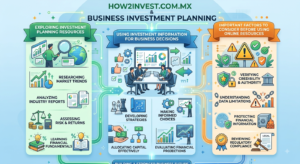
How2invest com mx can be considered one source of general investment information during the research stage of business planning. Online investment resources can help readers understand concepts before they examine a particular opportunity in greater detail. However, businesses should compare information from multiple reliable sources and evaluate it against their own financial position. Market research and financial projections are particularly important when an investment could significantly affect the company.
Exploring Investment Planning Resources
Investment resources can help business owners become more familiar with financial terminology and planning methods. They may also provide educational material that helps readers identify questions they should investigate further. Such resources are most useful when they are combined with company-specific financial information and independent research.
Using Investment Information for Business Decisions
Businesses should use investment information as one input in a broader decision-making process. Market research can help companies understand customers, demand, market size, and competitors, while financial projections can help estimate revenue, expenses, and cash flow. The SBA recommends market research and competitive analysis as tools for understanding business opportunities and reducing uncertainty.
Important Factors to Consider Before Using Online Resources
Businesses should consider the source, purpose, date, and supporting evidence behind online financial information. They should also distinguish general educational content from personalized investment recommendations. When a decision involves substantial capital, businesses should verify important information and consider professional advice where appropriate.
Why Business Investment Planning Matters
Investment planning matters because businesses have limited resources and must choose carefully how those resources are allocated. How2invest com mx company needs to consider its operating requirements, financial capacity, expected investment costs, and future objectives before committing capital. Financial projections can help businesses establish realistic goals, assess feasibility, and monitor actual performance against expectations.
Supporting Business Growth
Investment can support business growth when capital is directed toward a realistic opportunity. Companies may invest in additional capacity, new markets, technology, or other activities that support their strategy. Market research can help businesses understand demand and competitive conditions before they commit resources.
Improving Financial Decision-Making
Financial information gives management a clearer view of expected revenue, expenses, and cash requirements. Financial projections can be used to set realistic goals and assess whether a business plan is financially feasible. They can also help management compare actual performance with expectations and make adjustments when significant differences appear.
Managing Business Resources Effectively
Every investment uses resources that could potentially be used elsewhere in the company. Careful planning helps management compare competing priorities before committing money. This is especially important when a business needs to maintain sufficient cash for normal operating expenses while also pursuing growth.
Preparing for Future Business Opportunities
A clear financial plan can help a business understand its current resources and anticipate future funding requirements. Financial projections can also help management evaluate whether a potential opportunity fits the company’s capacity. Having organized financial information makes it easier to respond when new opportunities appear.
How to Create a Business Investment Plan
Creating a business investment plan starts with reviewing the company’s current financial position and establishing a clear objective. The business can then determine a suitable budget, research the opportunity, estimate costs and benefits, and assess potential risks. Financial projections should be based on reasonable assumptions supported by business and market information.
Assess Your Current Financial Position
Before investing, a business should understand its cash position, revenue, expenses, debt, and upcoming financial obligations. This information helps management determine how much capital may be available for an investment without putting normal operations under unnecessary pressure. A realistic financial assessment provides a stronger starting point for planning.
Set Clear Investment Objectives
Every investment should have a specific purpose connected to the company’s wider goals. The objective could involve improving efficiency, increasing capacity, entering a new market, or developing a product. Clear objectives make it easier to establish appropriate measures for judging whether the investment has delivered the expected value.
Determine an Investment Budget
An investment budget establishes how much money the business is prepared to allocate. The budget should consider the initial cost as well as relevant ongoing expenses, maintenance, training, or implementation requirements. Businesses should also consider how the spending could affect cash available for everyday operations.
Research Potential Investment Opportunities
Research can help a business understand demand, competitors, pricing, market size, and potential challenges. The SBA notes that market research can help businesses understand customers and reduce risks, while competitive analysis can help identify advantages and opportunities. This information can make an investment decision more evidence-based.
Evaluate Risks and Expected Returns
Businesses should consider both potential benefits and possible losses before investing. Every investment involves some level of risk, and higher potential returns can involve greater risk. A realistic evaluation should therefore consider what could go wrong as well as what the business hopes to gain.
Create a Long-Term Investment Strategy
A long-term strategy connects individual investments with the company’s broader objectives. It can establish priorities, budgets, timeframes, and methods for measuring performance. Because market and business conditions can change, the strategy should be reviewed periodically rather than treated as permanent.
Business Investment Opportunities to Consider

How2invest com mx can invest in many different areas depending on their financial resources and strategic priorities. Common possibilities include expansion, technology, marketing, employee development, and new products or services. No single investment category is suitable for every business, so each opportunity should be evaluated according to its expected benefits, costs, risks, and strategic relevance.
Business Expansion and New Markets
Expansion may involve entering a new geographic area, increasing production capacity, opening another location, or targeting a different customer group. Before making such an investment, businesses should research demand, competition, market size, and operating requirements. Market research can help determine whether a proposed expansion has a realistic customer base.
Technology and Digital Transformation
Technology investments can include software, equipment, automation, digital systems, and cybersecurity measures. A business should first identify the specific problem the technology is expected to solve. It should then compare purchase, implementation, training, maintenance, and other costs with the expected business benefits.
Marketing and Brand Development
Marketing investment can support customer acquisition, awareness, and sales activities. Businesses should identify their target customers and establish clear objectives before spending significant resources. Measuring results can help management determine whether marketing expenditure is producing useful business outcomes.
Employee Training and Development
Employee training can be valuable when a business needs new skills or wants to improve existing capabilities. Training may become particularly relevant when new technology, processes, or products are introduced. Companies should consider the cost of training alongside the expected improvements in employee capabilities and business performance.
New Products and Services
Developing new products or services can create opportunities for additional revenue, but it also involves uncertainty. Businesses should research customer demand, competitors, pricing, development costs, and available resources before making a large commitment. Testing important assumptions can help reduce the risk of spending heavily on an offering that lacks sufficient demand.
How Businesses Can Evaluate Investment Opportunities
Evaluating a How2invest com mx requires more than looking at its potential financial return. Businesses should consider market conditions, total costs, risks, timing, cash requirements, and strategic value. Financial projections can help translate assumptions about revenue and expenses into a clearer picture of potential outcomes.
Research the Market
Market research helps businesses understand customers, competitors, demand, and economic conditions. The SBA recommends examining areas such as demand, market size, economic indicators, and competitive factors when researching an opportunity. This information can help businesses identify both potential opportunities and limitations.
Calculate Potential Costs and Returns
Businesses should estimate the initial investment and expected ongoing costs. They can then develop reasonable projections for revenue, savings, productivity improvements, or other measurable benefits. Financial projections should be based on available evidence and clearly stated assumptions rather than overly optimistic expectations.
Assess Investment Risks
Risk assessment involves identifying circumstances that could cause an investment to perform below expectations. These may include lower demand, unexpected costs, competition, economic changes, or operational difficulties. Understanding these factors helps management determine whether the potential opportunity is appropriate for the company’s financial position.
Compare Different Opportunities
Businesses can compare investment opportunities based on cost, risk, expected benefits, timing, and strategic importance. This approach prevents management from choosing an opportunity simply because it appears attractive at first glance. The comparison should also consider what the company gives up by directing resources toward one opportunity instead of another.
Consider Long-Term Business Value
Some investments produce benefits gradually rather than immediately. Technology, employee training, new systems, and market development may take time to generate measurable results. Businesses should therefore consider whether an investment can contribute to longer-term efficiency, competitiveness, capacity, or growth.
Read more: Is Furtherbusiness com Safe? Honest Review and Analysis
Managing Risks in Business Investment Planning
Risk management is an important part of investment planning because no investment outcome is guaranteed. Businesses can reduce unnecessary exposure by identifying potential problems, maintaining appropriate financial flexibility, and monitoring performance. How2invest com mx diversification can reduce concentration risk in suitable investment situations, although it cannot guarantee protection from losses.
Identify Potential Investment Risks
Businesses should identify factors that could negatively affect an investment before committing capital. These can include weak demand, rising expenses, competition, operational problems, or changing market conditions. Considering potential downside scenarios helps management make a more balanced assessment.
Avoid Overcommitting Business Capital
A business should be cautious about committing too much available capital to one opportunity. Money may also be required for wages, suppliers, taxes, debt obligations, and unexpected operating costs. Maintaining reasonable financial flexibility can help a company continue operating even if an investment does not perform as expected.
Diversify Where Appropriate
Diversification involves spreading money across different investments instead of concentrating it in one area. Investor.gov explains that diversification can reduce the impact of a single investment performing poorly, although it cannot guarantee that losses will be avoided. Businesses should still consider the costs, objectives, and risks associated with each investment.
Monitor Investment Performance
Investment planning should continue after capital has been committed. Businesses can compare actual revenue, expenses, cash flow, or other relevant results with their original projections. Monitoring can reveal significant differences and give management an opportunity to investigate and respond.
Review and Adjust the Investment Plan
Business conditions can change after an investment plan has been created. Customer demand, costs, competitors, technology, and financial circumstances can all affect the original assumptions. Regularly reviewing the plan allows management to update its strategy instead of continuing with outdated expectations.
Common Business Investment Planning Mistakes
Investment planning can become ineffective when businesses make decisions without clear objectives or adequate financial information. Common mistakes include ignoring cash flow, underestimating risks, focusing too heavily on short-term outcomes, and failing to monitor results. How2invest com mx a business plan should be treated as a practical management tool that can change as new information becomes available.
Investing Without Clear Goals
An investment without a defined purpose can be difficult to evaluate. Businesses should establish what they expect the investment to accomplish before committing funds. A clear objective provides a benchmark for measuring results later.
Ignoring Business Cash Flow
Cash flow is essential to maintaining normal business operations. An investment can create financial pressure if it consumes money required for everyday expenses or unexpected obligations. Financial projections that examine cash inflows and outflows can help management understand the potential effect of an investment on liquidity.
Underestimating Investment Risks
Businesses sometimes focus on potential benefits while giving insufficient attention to possible problems. A stronger approach identifies realistic risks and considers their potential financial impact before investing. This does not mean avoiding every risk; it means understanding the level and type of risk being accepted.
Chasing Short-Term Returns
Short-term results do not always represent the full value of a business investment. Some investments are designed to improve operations or create future opportunities over a longer period. Businesses should use an appropriate timeframe when evaluating whether an investment has achieved its intended purpose.
Failing to Monitor Results
An investment can perform differently from its original forecast. Without regular monitoring, management may not notice important changes until they become more difficult to address. Comparing actual results with projections can help identify variances and support informed adjustments.
How Technology Is Changing Business Investment Planning in 2026
Technology is giving businesses more ways to collect, organize, and analyze financial and market information. Digital tools can support budgeting, forecasting, reporting, and financial record management, while newer analytical technologies can assist with larger amounts of information. Artificial intelligence can support certain business-analysis tasks, but its outputs still require appropriate human review.
Data-Driven Investment Decisions
How2invest com mx can use information about customers, sales, costs, competitors, and markets to support investment planning. Reliable data can make assumptions more realistic and help management identify important patterns. However, data still needs to be interpreted in context because historical results do not guarantee future performance.
AI and Business Analysis Tools
AI-based tools can help organize information, identify patterns, summarize material, and support certain analytical processes. However, automated systems can produce incomplete or incorrect information if their inputs or assumptions are weak. Businesses should therefore verify important AI-generated information before using it in significant financial decisions.
Digital Financial Management
Digital financial systems can help businesses organize budgets, expenses, forecasts, and performance information. Better organization can make financial information easier for managers to review and use. The effectiveness of any digital system still depends on accurate records, appropriate implementation, and responsible interpretation.
Real-Time Information and Market Research
Digital platforms allow businesses to access market information quickly. This can be useful when monitoring customer trends, competitors, pricing, or other changing conditions. However, recent information is not automatically reliable, so businesses should verify important information and consider the source before acting on it.
Practical Tips for Better Business Investment Planning
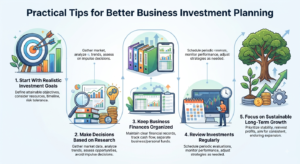
Better investment planning starts with clear objectives, realistic assumptions, and reliable information. How2invest com mx businesses should understand their financial position, research opportunities, estimate costs, assess risks, and establish a system for monitoring results. Financial projections can help companies set realistic goals and assess whether an investment is financially feasible.
Start With Realistic Investment Goals
Investment goals should match the company’s financial resources and broader business strategy. A business should be able to explain what it wants to achieve and why the investment is necessary. Realistic goals make it easier to establish an appropriate budget and measure the eventual results.
Make Decisions Based on Research
Research should cover customers, competitors, market conditions, costs, and other factors that could affect the investment. Market research can help businesses understand demand and competitive conditions before committing resources. Evidence-based decisions are easier to evaluate than decisions based mainly on assumptions.
Keep Business Finances Organized
Accurate financial records give management a clearer understanding of revenue, expenses, assets, liabilities, and available resources. Organized information also supports more useful budgeting and financial projections. A business that understands its financial position can make more informed judgments about whether an investment is affordable.
Review Investments Regularly
Businesses should compare actual investment performance with their original objectives and expectations. Management can examine changes in revenue, costs, cash flow, or other relevant measures. Regular review makes it easier to identify unexpected results and decide whether adjustments are necessary.
Focus on Sustainable Long-Term Growth
Investment decisions should support the company’s broader strategy rather than focus only on immediate gains. A sustainable approach considers financial capacity, operational requirements, risks, and future opportunities. Long-term thinking can help businesses decide whether an investment contributes meaningful value beyond the initial spending period.
How2invest com mx: Key Considerations for Businesses
How2invest com mx can be considered one source of online investment information when businesses research financial and business topics. Readers should distinguish general educational information from personalized financial recommendations and verify important claims before acting on them. Businesses should also consider their own financial position, objectives, risk tolerance, and investment timeframe.
Verify Investment Information Before Acting
Businesses should check important financial information against reliable sources before acting on it. This is particularly important for claims involving expected returns, costs, market conditions, or investment risks. Verification can help reduce the possibility of making a major decision based on incomplete or outdated information.
Understand Costs, Risks, and Potential Returns
Businesses should examine both the potential benefits and the costs associated with an investment. Investor.gov advises investors to consider costs, liquidity, diversification, and fraud risks when evaluating investment products. Potential returns should therefore never be considered separately from the risks and expenses involved.
Match Investment Decisions With Business Goals
An investment should have a logical connection to the company’s objectives. A business focused on expansion may prioritize capacity or market development, while another company may prioritize efficiency, technology, or financial stability. The appropriate decision depends on the company’s specific circumstances and priorities.
Avoid Making Decisions Based on Information Alone
Online information can support research, but it cannot fully account for every detail of an individual company’s finances and obligations. Businesses should combine educational material with financial analysis, market research, internal objectives, and appropriate professional advice when necessary. This creates a stronger foundation for significant investment decisions.
Final Thoughts on How2invest com mx and Business Investment Planning
How2invest com mx can be part of the research process for readers exploring investment and business-related subjects. However, the most important part of business investment planning is understanding whether a particular opportunity fits the company’s financial capacity, objectives, and risk level. A structured approach should include clear goals, market research, realistic financial projections, cost analysis, risk assessment, and ongoing performance reviews.
The SBA similarly emphasizes business planning, market research, financial projections, and monitoring as useful parts of sound business management. By combining reliable information with company-specific analysis, businesses can approach investment decisions more carefully and realistically.
FAQs About How2invest com mx
What Is How2invest com mx?
It is an online resource focused on investment and financial information. It can help readers research general investment topics before making business decisions.
Why Is Business Investment Planning Important?
Business investment planning helps companies connect financial resources with specific goals. It also helps evaluate costs, risks, cash flow, and potential returns before investing.
How Can a Business Create an Investment Plan?
A business can create an investment plan by reviewing its finances, setting clear goals, and establishing a budget. It should also research opportunities, evaluate risks, and monitor results.
What Should Businesses Consider Before Investing?
Businesses should consider their goals, available capital, costs, risks, potential benefits, and market conditions. They should also compare different opportunities before committing funds.
How Can Businesses Manage Investment Risks?
Businesses can manage investment risks through research, realistic budgeting, diversification, and regular monitoring. Reviewing investments regularly can help identify problems and support timely adjustments.